Overview
LAND OF LAKES AND VOLCANOES
Nicaragua is Central America’s largest country by land area — a place of volcanoes, lakes, colonial cities, surf beaches, coffee highlands, and Caribbean islands that have remained largely beyond the reach of mass tourism.
From Managua, the capital and main gateway, travelers spread out in several directions: south to colonial Granada on Lake Nicaragua, north to university city León and the active volcanic corridor, west to Pacific surf towns and beach lodges, and east — a world apart — to the Corn Islands in the Caribbean. Ometepe, a volcanic island sitting in the middle of Lake Nicaragua, is one of the country’s most memorable destinations for active travelers.
Nicaragua appeals especially to those interested in nature, volcano trekking, surfing, colonial architecture, coffee country, and quieter travel experiences. Its combination of accessible adventure — including the ability to drive to the smoking crater of Masaya Volcano and watch lava at night — with genuine cultural depth and strong artisan traditions makes it a rewarding destination for travelers who want something beyond the packaged itinerary.
Best for adventurous travelers, surfers, volcano enthusiasts, coffee country explorers, and anyone looking for Central America’s colonial character and natural drama without the crowds of neighboring countries.
Geography
WHERE EVERYTHING IS
Nicaragua runs from the Pacific volcanic corridor in the west across Lake Nicaragua and the highland coffee regions to the low Caribbean coast in the east. The Corn Islands lie roughly 70 kilometers offshore in the Caribbean — a separate world reachable by short flight from Managua. Click any marker to see what’s there.
Tap or click markers for details. Pinch / scroll to zoom.
Why Go
WHAT MAKES NICARAGUA STAND APART
Colonial Cities
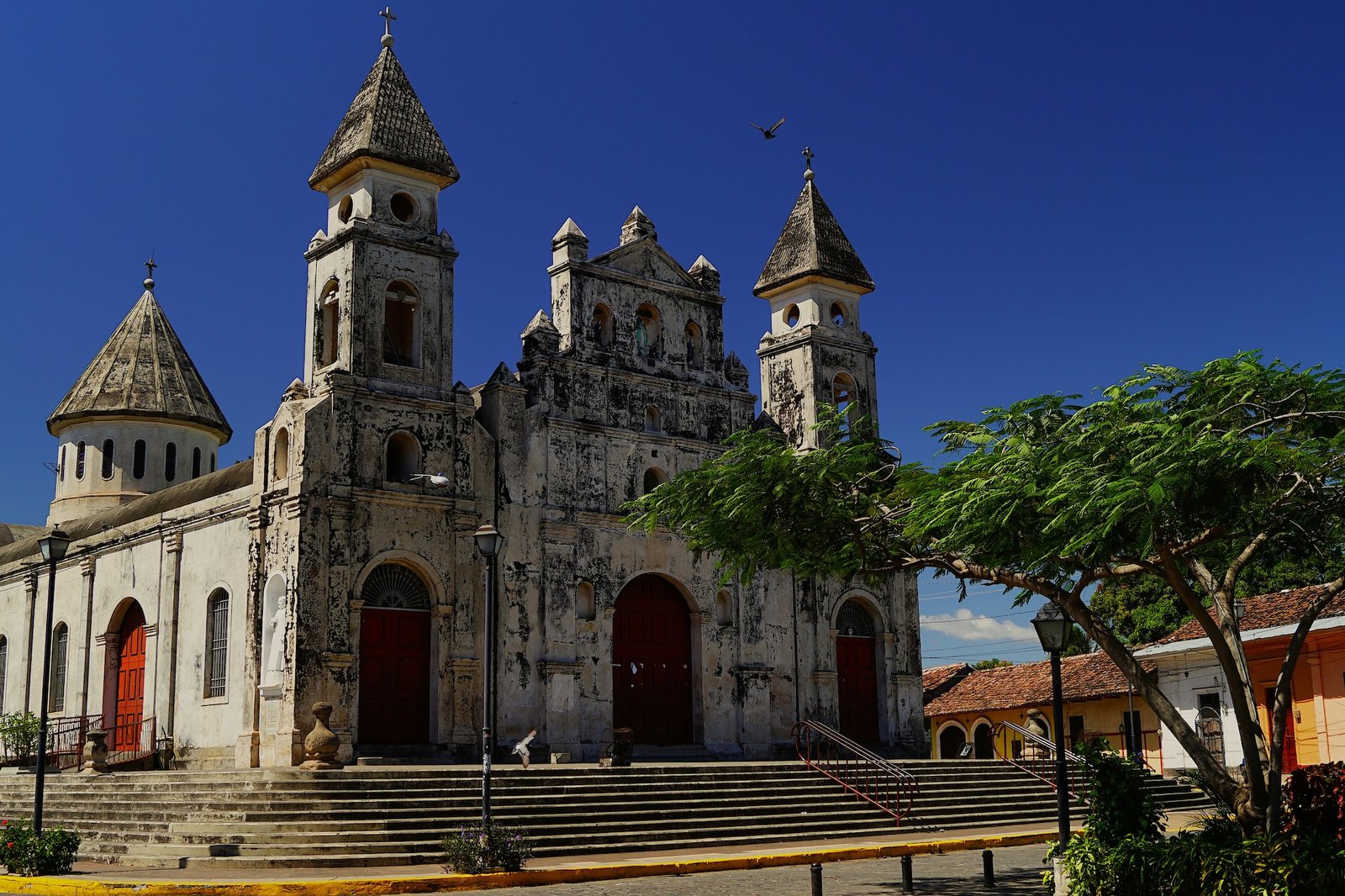
Granada and León are two of Central America’s finest colonial cities — colorful, walkable, rich with churches, history, local food, and boutique hotels. Both reward slow exploration and use as a base for day trips.
Volcano Adventures
Nicaragua has more active volcanoes in closer proximity than almost anywhere in Central America. You can drive to the glowing crater of Masaya, board down the slopes of Cerro Negro outside León, or hike to the summit of Concepción on Ometepe Island.
Lake Nicaragua & Ometepe
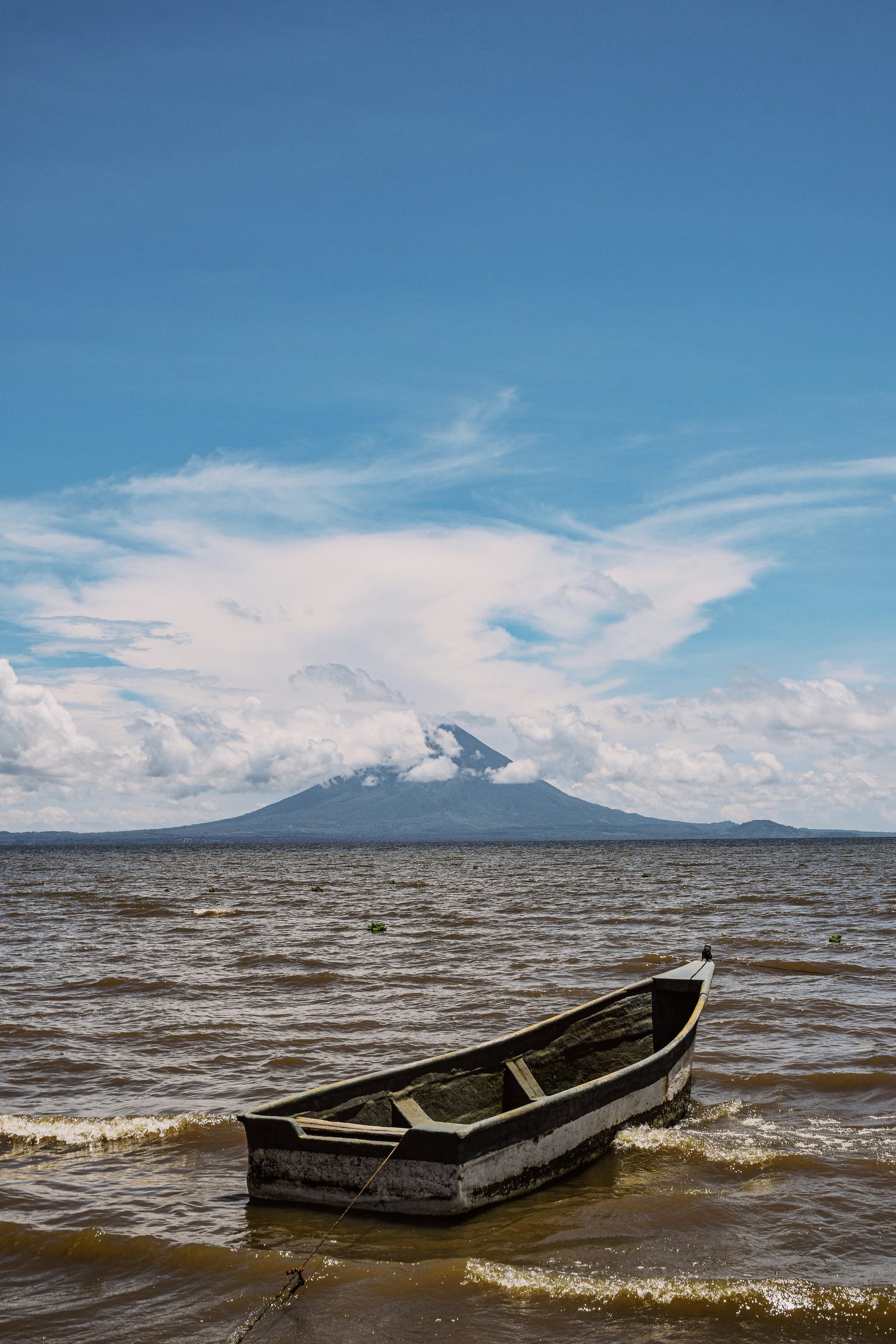
Lake Nicaragua is Central America’s largest lake. Within it, Ometepe Island — formed by two volcanoes rising from the water — offers hiking, kayaking, coffee farms, petroglyphs, and a pace of life found nowhere else in the region.
Pacific Surf & Beaches
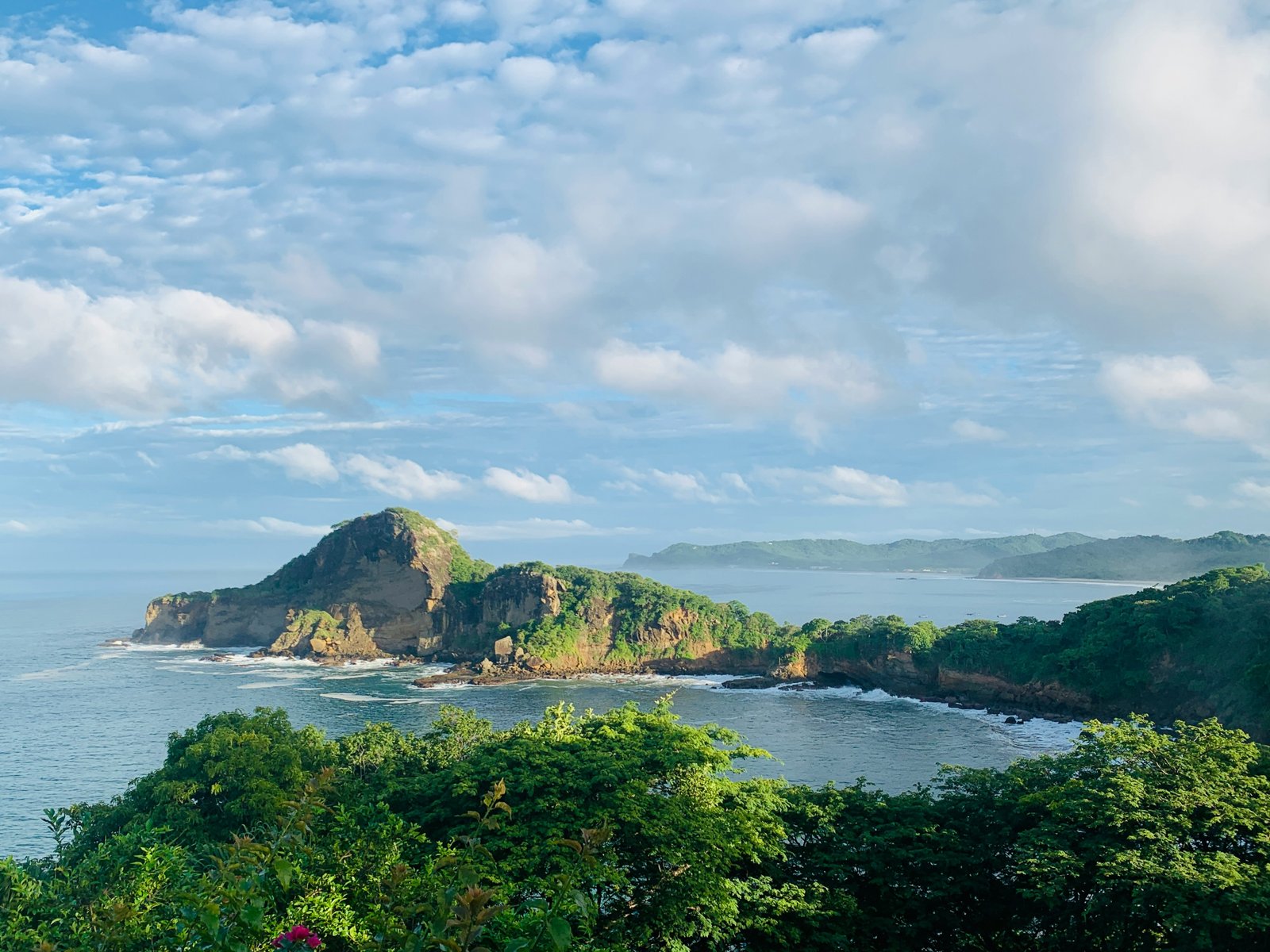
The Pacific coast around San Juan del Sur has consistent surf breaks, beach lodges, fishing, and a relaxed town atmosphere that draws independent travelers and surfers looking for a Caribbean alternative to the resort strip.
Corn Islands
Off the Caribbean coast, Big Corn and Little Corn islands feel completely unlike mainland Nicaragua. English Creole is spoken, the pace is unhurried, and diving, snorkeling, and fresh seafood are the main events. Little Corn is car-free.
Coffee Country
The northern highlands around Matagalpa and Jinotega are cooler, greener, and entirely different from the Pacific lowlands — cloud forests, working coffee farms, hiking trails, waterfalls, and rural lodges far from the tourist circuit.
Top Experiences
PLAN AROUND EXPERIENCES, NOT JUST REGIONS
Granada & the Lake Islets
Granada is Nicaragua’s most visited colonial city — restored architecture, colorful streets, lakefront setting, good restaurants and boutique hotels. Boat tours through the Islets of Granada, hundreds of small volcanic islands in Lake Nicaragua, are a highlight. Day trips reach Masaya Volcano and nearby artisan towns.
Masaya Volcano
One of Central America’s most accessible volcanic experiences. You can drive to the edge of the active crater, watch volcanic gases rise during the day, and on clear nights, view an active lava lake glowing in the dark — one of the more extraordinary sights in the region.
Ometepe Island
Lake Nicaragua’s volcanic island offers something for every kind of traveler: volcano hikes on Concepción and Maderas, kayaking and cycling, swimming holes, pre-Columbian petroglyphs, coffee farms, and lakeside villages that move at their own pace. The dry season from November to April is the best window for outdoor activities.
León & Cerro Negro
León is Nicaragua’s intellectual and political city — university town, colonial churches, murals, and museums. Nearby Cerro Negro is one of the world’s youngest volcanoes and the site of volcano boarding: hiking to the top and sliding down the black ash slope on a wooden board. Not for everyone — but unforgettable.
San Juan del Sur & Pacific Surf
Nicaragua’s best-known Pacific beach town is popular with surfers, sailors, and independent travelers. The surrounding coast has multiple surf breaks, beach lodges, and quieter coves accessible by boat or rough road. The Sunday beach parties here are legendary.
Corn Islands
The Corn Islands off the Caribbean coast offer a completely different Nicaragua — English Creole spoken, relaxed island pace, diving and snorkeling in clear Caribbean water, fresh lobster and seafood. Big Corn has the airport; Little Corn is car-free and quieter, reached by a fast boat crossing.
Timing
WHEN TO VISIT NICARAGUA
Dry Season
November to April is generally the driest and most comfortable period across most of Nicaragua — the best window for colonial cities, volcano trekking, Ometepe Island, and most outdoor activities.
Surfing
The Pacific coast receives consistent swells year-round, with the largest waves typically arriving in the May to October wet season. Experienced surfers often prefer these months; beginners and beach travelers are more comfortable in the dry season.
Caribbean & Corn Islands
The Caribbean coast and Corn Islands follow a different rainfall pattern from the Pacific side. The driest months on the Caribbean tend to be March to May and September to October, though weather here is less predictable year-round.
Green Season
May to October brings afternoon rains across the Pacific and highland regions. Landscapes are lush and dramatically green, prices drop, and crowds thin. Mornings are typically clear and workable for most activities.
Travel Essentials
FACTS & PRACTICAL DETAILS
SAFETY ADVISORY
The U.S. Department of State currently lists Nicaragua as a Level 3: Reconsider Travel destination due to the political environment and arbitrary enforcement of local laws. Travelers should stay informed of current conditions before and during their trip.
Visitors should be aware of political sensitivities, follow local rules carefully, and avoid any activity that could be perceived as politically sensitive. Many travelers visit Granada, León, Ometepe, and the Pacific coast without incident. Confirm current entry requirements, local regulations, and any travel warnings from your government before departure.
Key Areas
A SIMPLE GEOGRAPHY OF NICARAGUA
Managua
Nicaragua’s capital is the main arrival point and transportation hub for the country. While many travelers continue quickly to Granada, León, or the coast, Managua offers museums, restaurants, markets, nightlife, lakefront areas, and modern hotels. The old city center around the ruined old cathedral, Puerto Salvador Allende on Lake Managua, and city viewpoints are worth exploring for those spending a night or more.
Granada & Lake Nicaragua
Founded in 1524, Granada is one of Central America’s great colonial cities. Its restored architecture, colorful streets, churches, boutique hotels, restaurants, and location beside Lake Nicaragua make it the country’s top visitor destination. Popular activities include boat tours through the Islets of Granada, visits to nearby artisan towns, day trips to Masaya Volcano, and excursions on the lake. Lake Nicaragua is Central America’s largest lake, with hundreds of islands — including volcanic Ometepe.
Masaya Volcano & Artisan Towns
Masaya Volcano National Park is one of Nicaragua’s most accessible and dramatic volcanic experiences. Visitors can drive close to the active crater and — when conditions allow — view volcanic gases during the day and a glowing lava lake at night. Nearby artisan towns are known for hammocks, pottery, woodworking, and traditional crafts. Masaya’s main market is the best place in Nicaragua to buy quality handmade goods.
Ometepe Island
Located in Lake Nicaragua, Ometepe is formed by two volcanoes — Concepción and Maderas — rising directly from the water. It is one of Nicaragua’s most memorable destinations, particularly for active travelers. Activities include volcano hiking, kayaking, cycling, swimming holes, pre-Columbian petroglyphs, coffee farm visits, and lakeside village life. The dry season, roughly November to April, is generally the best time for outdoor activities.
León & the Volcanic Corridor
León is a historic university city with colonial churches, political murals, museums, and strong cultural identity. Nearby León Viejo — founded in 1524 and abandoned after volcanic activity — is one of the most important archaeological sites in Nicaragua and a UNESCO World Heritage Site. The surrounding region is also popular for volcano boarding at Cerro Negro and excursions to several active volcanoes along the Pacific corridor.
San Juan del Sur & the Pacific Coast
San Juan del Sur is Nicaragua’s best-known Pacific beach town — a hub for surfing, fishing, sailing, and nightlife, with easy access to quieter beaches and surf breaks up and down the coast. The surrounding coastline has beach lodges, surf camps, and coves accessible by boat. It’s especially popular with independent travelers, surfers, and visitors looking for a relaxed Pacific base. Montelimar, farther north on the Pacific coast, offers resort-style beachfront accommodations west of Managua.
Corn Islands
The Corn Islands sit off Nicaragua’s Caribbean coast — an entirely different world from the Pacific side. English Creole is widely spoken, the rhythm is Caribbean, and the main attractions are diving, snorkeling, fishing, and fresh seafood. Big Corn Island has the airport and more services; Little Corn Island is quieter, car-free, and popular with travelers seeking a simple Caribbean escape. Reached by short flight from Managua or by ferry from the Caribbean port of El Bluff.
Matagalpa & Coffee Country
The northern highlands around Matagalpa and Jinotega offer cooler temperatures, cloud forests, working coffee farms, hiking trails, waterfalls, and rural lodges far from the main tourist circuit. This region is ideal for travelers who want a mountain and coffee-country experience away from the Pacific heat. Matagalpa city has colonial architecture, local markets, and is a comfortable base for highland day trips.
Parks & Wildlife
PROTECTED LANDS & NATURAL WONDERS
Nicaragua’s protected areas range from an active lava lake you can visit by car to remote Caribbean rainforests that remain among the largest intact lowland forests in Central America. The country’s natural diversity — volcanoes, lakes, cloud forests, Pacific coast, and Caribbean lowlands — supports extraordinary wildlife.
Masaya Volcano National Park
Nicaragua’s most visited natural attraction and one of Central America’s most accessible active volcanoes. The park contains two calderas and five craters, including Santiago — where visitors can peer into an active lava lake. The surrounding lava fields host a colony of parakeets that nest inside the crater walls.
Mombacho Volcano Natural Reserve
Rising above Granada and Lake Nicaragua, Mombacho’s cloud forest summit hosts orchids, bromeliads, howler monkeys, and extraordinary views over the islets below. Canopy tours, hiking trails, and naturalist guides are available. The reserve is managed in partnership with a local foundation and operates on a well-maintained trail system.
Ometepe Biosphere Reserve
The entire island of Ometepe is designated a UNESCO Biosphere Reserve. Its twin volcanoes support diverse habitats — dry tropical forest on the lower slopes, cloud forest near the summits, and wetlands along the shoreline. Howler monkeys, white-faced capuchins, parrots, and iguanas are commonly seen.
Indío Maíz Biological Reserve
One of Central America’s largest remaining lowland rainforests, located in the remote southeastern corner of Nicaragua near the Costa Rican border. Home to jaguars, tapirs, giant river otters, freshwater sharks, sea turtles, and hundreds of bird species. Largely inaccessible without an organized expedition — a true wilderness reserve.
Bosáwas Biosphere Reserve
Nicaragua’s largest protected area and one of the largest reserves in Central America, covering highland cloud forests and lowland rainforests in the north. The reserve protects critical habitat for jaguars, pumas, tapirs, and an extraordinary range of Mesoamerican biodiversity. Remote and difficult to access — visited mainly by serious naturalists and researchers.
Volcanic Corridor
The chain of active and dormant volcanoes running along Nicaragua’s Pacific coast — from Cosigüina in the northwest to Maderas on Ometepe — forms one of Central America’s most dramatic landscapes. Cerro Negro, Telica, San Cristóbal, Momotombo, and Concepción are all accessible with guides of varying difficulty and experience requirements.
Traveler Questions
NICARAGUA TRAVEL FAQ
Is Nicaragua safe to visit right now?
Nicaragua’s situation has been politically tense since 2018, and the U.S. State Department has maintained elevated travel advisories for the country. Independent travel is still possible and many travelers report safe visits, particularly to established destinations like Granada, León, and Ometepe Island. However, the political environment is unpredictable and travelers should review current advisories carefully before planning a trip. Overland border crossings and public demonstrations carry particular risk.
What are Nicaragua’s main draws for travelers?
Nicaragua has remarkable geography and colonial architecture at prices that are among the lowest in Central America. Granada, on the shores of Lake Nicaragua, is one of the best-preserved Spanish colonial cities in the Americas. León has a vibrant university culture and revolutionary art scene. Ometepe Island — a freshwater island formed by two volcanoes — is one of Central America’s most unusual destinations. The Pacific surf beaches around San Juan del Sur attract long-stay visitors.
Is Nicaragua affordable?
Yes — Nicaragua has historically been one of the most affordable destinations in Central America for accommodations, food, local transportation, and activities. The economic situation has created both challenges and bargains. Travelers who do go often find their money stretches significantly further than in Costa Rica or Belize. Local restaurants, buses, and guesthouses are very inexpensive by regional standards.
What is the best time to visit Nicaragua?
The dry season from November through April is the ideal time to travel, with less heat and humidity on the Pacific side and manageable conditions in the highlands around Matagalpa and Estelí. The rainy season from May through October is lush and green but involves daily heavy showers. Lake Nicaragua and the Caribbean coast have their own precipitation patterns and can be visited year-round.
LOCAL SPECIALISTS WE TRUST
Nicaragua’s operator community has shown remarkable resilience. The country’s colonial cities, volcanoes, and lake archipelago remain genuinely rewarding — and these operators have continued to run excellent programs through changing conditions.
Tours & Adventure
Tours Nicaragua
Nicaragua’s most established custom tour operator, running since 1996 and featured in National Geographic, the New York Times, and Frommer’s. Private itineraries covering the volcanic chain, Ometepe Island, Granada and León colonial cities, Caribbean coast (Corn Islands), eco-tours, and birding.
Best for: Custom multi-day itineraries with deep local expertise — the most experienced private guide operation in the country.
Geo Tours Nicaragua
Managua-based DMC with 25+ years specializing in geotourism, culture, and eco-adventures across Granada, León, and the capital. Covers day tours, vacation packages, Masaya Volcano, cruise ship shore excursions, and educational group programs. Member of the WTTC.
Best for: Day tours and shore excursions covering Nicaragua’s volcanic and colonial highlights, with strong English-language service.
Welcome to Nicaragua
Granada-based operator with a TripAdvisor Certificate of Excellence, specializing in the southern colonial circuit — Masaya Volcano night tours, the Islets of Granada, Apoyo Lagoon, Mombacho cloud forest zipline, and multi-day colonial packages.
Best for: Granada day tours and the classic Nicaragua colonial circuit — Masaya Volcano, Apoyo Lagoon, and the lake islets.
Surf & Pacific Coast
Popoyo Surf Lodge
Nicaragua’s first surfing operation, founded 1999, based on the Popoyo coastline with access to 10+ world-class breaks — offering surf camps, lessons, board rentals, and multi-day surf packages for all levels.
Best for: Surf camps and multi-day surf packages on Nicaragua’s Pacific coast.
Latin Travel does not book tours directly. These are editorial selections. Please mention Latin Travel when you contact them — it helps us keep this guide current.
Nicaragua delivers colonial cities, active volcanoes, a lake big enough to hold a volcanic island, Pacific surf, and a Caribbean coast on its own terms — all in a country that still moves at its own unhurried pace. The travelers who find it tend to keep it close.
Ask Jim and Jane About Nicaragua